
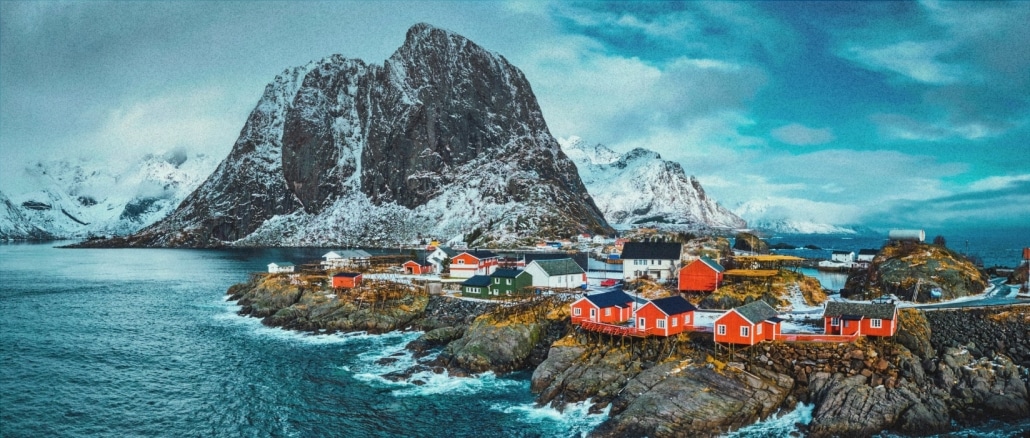
Pyramiden
Why did they want to go there?
Person 1: “I just want to see it.”
What was the place?
Benny didn’t know anything about the place, but she felt like her mind was already made up. If docking in the port put money in the pockets of the Russian state, then the answer was no, they shouldn’t go. Thirty artists and writers populated the brigantine ship sailing the Arctic Ocean. They were there to do research and creative work. The guide who was leading them asked the two people who really wanted to go to tell the group more about why they wanted to go.
What did they say?
Person 2: “It’s one of the main reasons I wanted to come to the Arctic. There’s nothing else like it. I think it’s important to see things that are singular and that we can’t see anywhere else because I’m never going to be back here. If I don’t see it now, I never will.”
Was that a good enough reason?
Benny thought of all the things the people in this room would never see, first in line being the hundreds of thousands of Ukrainians being murdered by Russians. But she understood. She had gone to see things she felt conflicted about in the past, like the Heidelberg Project in Detroit that had started to gentrify a nearly-abandoned neighborhood, making a spectacle of the few who remained before forcing them out. Or Marfa, with its influx of art cachet and cash into a defunct military base town. This seemed worse, though. They’d be directly putting money into the pockets of a nation that, just the week, before had “tested” a nuclear weapon by firing it into the Bering Sea.
So no.
Person 1: “I want to take images of it. So few people get to see it and I want to document it so that others can experience it without having to go there.”
Person 2: “And we use Russian oil? How is that different?”
What was it even?
The tour guide asked someone to describe what Pyramiden even was so that people could understand as they made their decision.
People stalled.
Person 1: “It was a Russian coal mining town. It’s abandoned now.”
The tour guide clarified that it was no longer abandoned. “It’s been reopened as a tourist destination. We would have to pay a harbor fee to the Russian state.”
Person 1: “But it’s like a perfectly preserved outpost of USSR architecture and culture. There’s a bust of Lenin.”
At that latitude, there was no cell service or WIFI connection, so the occupants of the boat had to rely on the knowledge that the others had, as biased and imperfect as it might be. No one who had not done research before the trip could do their own research about the place now. They could not look up pictures of the place to see if it was worth going to look at in person. It was like they’d rolled back 30 years to a pre-internet time. They had only the influence of the other humans on the ship to make the decision.
Did anyone speak up against going?
Person 3: “For me, it’s clear. If the money we pay could be used by the Russian government to pay for the war, then we shouldn’t go. It cannot be that important that we would choose to kill a person to go there and see what used to be a ghost town. Remember that it is no longer a ghost town. It was and then the Russian state decided that their money was better spent trying to build it up again, rather than tearing it down.”
Person 4: “Ok, but what is the reverse of that? Nothing is black and white. It must be gray.”
Person 3: “No, it is black and white to me. It’s very clear we should not go.”
Person 4: “But is there no nuance to the decision?”
Person 5: “For me, my project is about monsters and I want to see the monsters and record them. Being here is as much about seeing the things that we celebrate about this place as it is seeing its scars and documenting those.”
Person 6 (to Person 5): “I agree. I believe you have valuable art to make from this. I believe that you deserve to see the place so you can make art about the place.”
So how many yeses does that make?
Definitely 3, possibly 5.
And how many people were there in total?
30.
Is that enough of a reason?
Person 4: “Yes, I think that it’s possible that in being there collectively with our pacifist intentions, that it might have an effect. We could change their minds.”
Did people buy that?
Benny saw several people hold their eyes firmly in place, willing them not to roll. She had many questions to pose in response, but she didn’t voice any of them: What would it look like to make art about this place without taking pictures of it? What would it be to deliberately take a picture of something else because they were choosing not to go to Pyramiden in this moment? Wouldn’t that be more interesting than a photo of the place itself? How could a person contextualize the photos of the place without having to answer for how they justified their going? If the boat chose to go there, and the dock fee was paid no matter what, would Benny get off and go on shore? Excellent question. She really couldn’t say. In that case, she supposed it was possible.
So, what was decided?
The guide pivoted away from the discussion. They needn’t decide today. Yes, it seemed like the port was close, but actually, if they decided to make the trip, they’d be more likely to do so on their way back home, at the end of their trip. So they could all think a bit more about it and decide how they felt and how they wanted to proceed.
Smart. Diffuse the tension.
Benny was impressed with the way the guide handled this. She was surprised that they were offering the group the option to make the choice themselves. It seemed like something that perhaps the ship’s company or country might have had an official policy about. Someone was bound to get their feelings hurt. Was it as simple as 25 people not wanting to go and five people wanting to go? Was this a democratic kind of situation or was it more complicated? Did they have to account for the strength of the opinions held by each person? If three people really wanted to go and a handful could see a reason for it, and then there were many others who felt sort of benignly against going, could that math work out in favor of going? Benny hoped not.
Why was Benny on the trip?
She had written an application statement with one reason, but she felt like the real reason was bigger than what she had been able to articulate.
What did she say in her application?
She said that she was working on a collection of stories that reckoned with environments that showed the extremes of climate change, as a sort of natural horror. But she had known that the terror she would face was most likely that humans were the source and the ecosystems were the victim of human negligence and even malevolence. She wanted to go there and think deeply about the ways that humans could haunt not just one another, but the world they lived in, other animals, the living sea, the breathing landscape. She didn’t know what she needed to know and that was usually why she found it useful to go to a place or to write about anything at all, so she could figure that out.
Did Benny figure out what she needed to know?
We always do, even if it doesn’t feel like it.
What did Benny find out?
The discussion was never picked up again. The few who wanted to go to Pyramiden did not want to go badly enough to ask again. And the ones who didn’t want to go didn’t want to talk about it for fear of rousing the passions of the ones who wanted to go. Or, they didn’t think about it again because they didn’t care.
Benny tried to draw a connection between the reason all of them were there and the reason that Pyramiden had been revived. In Svalbard, the archipelago that contained both the former coal town of Longyearbyen from which their journey had departed and the former ghost town of Pyramiden, as well as the research community of Ny-Ålesund, the carbon footprint was higher than that of any other humans on the planet. There were no humans indigenous to this land because nothing could grow there aside from some grasses, moss, and lichen. All food and supplies had to be shipped in. In being there to witness climate change in its sharpest form, they were making an outsized impact on the ecology of the entire planet. Svalbard could be left alone by humans as it had been left alone for all but the last few hundred years, but the tourism and research industries existed there now. If an industry existed there, humans would not leave willingly. And the artists and writers were there fueling both of those industries.
This modeled, to scale, a way of returning the earth to more responsible stewards. If this was not graspable, then perhaps they could look at Pyramiden, which was an even more human-sized example. Russia could have just given up their claim to that useless land, but instead, they made it a monument to its former misuse. They would not let go of it. Rather than paying a small amount of money to dismantle it, they would spend more money trying to see if something more could be wrung from it. Did it matter if they opted out of this tiny example of the larger problem? Benny was convinced it had to matter.
But Benny never said anything?
She didn’t feel she needed to at the time.
But should she have?
Yes, she regretted not speaking up.
But they didn’t end up going.
No, they did not.
* This is a work of fiction. Names, characters, places, and incidents are producs of the author's imagination. Any resemblance to real events or persons, living or dead, is entirely coincidental.